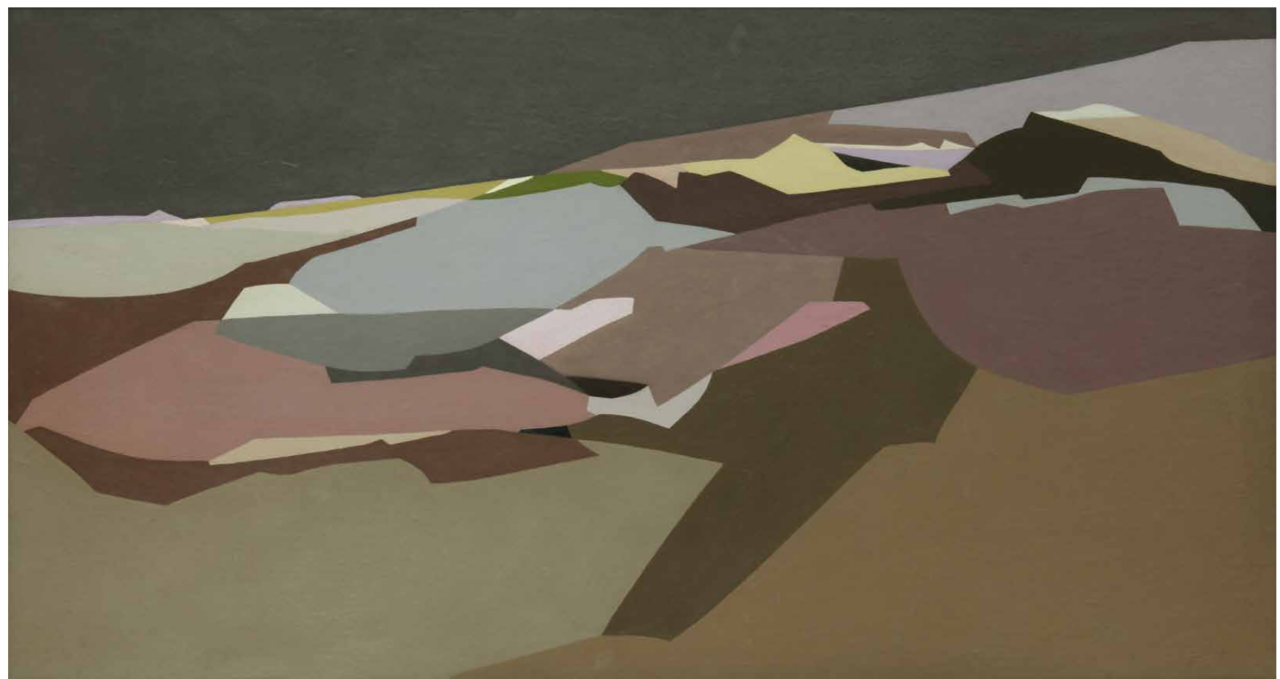
The painter Jean-Pierre Schmid, known as Lermite (1920–1977), was a leading figure in the Neuchâtel art scene. Known for his austere compositions blending landscape depictions of the Brévine Valley with geometric forms, he nevertheless developed a complex body of work over nearly forty years, drawing on Constructivism and Expressionism, in which depictions of technical objects from the worlds of farming and watchmaking coexisted with social satire and allegories with philosophical undertones. Lermite was also a prolific printmaker.
While he remains well-known in his home canton—which houses numerous works in public spaces as well as in museum collections—Lermite belongs to a generation of artists who enjoyed success in the 1960s before falling into relative obscurity.
To mark the fiftieth anniversary of his death, the MBAL, in partnership with the Lermite Foundation, is organizing a major retrospective of his work. By examining his body of work through the lens of contemporary issues, the exhibition offers a fresh perspective on this artist, his work, and his legacy. The exhibition takes its title from a handwritten note inscribed in 1947 by the artist on the wall of the “passade”—a waystation and public shelter for the destitute, located in the heart of the village of La Brévine. This phrase serves as a kind of manifesto, offering a poetic and joyful glimpse into his work.