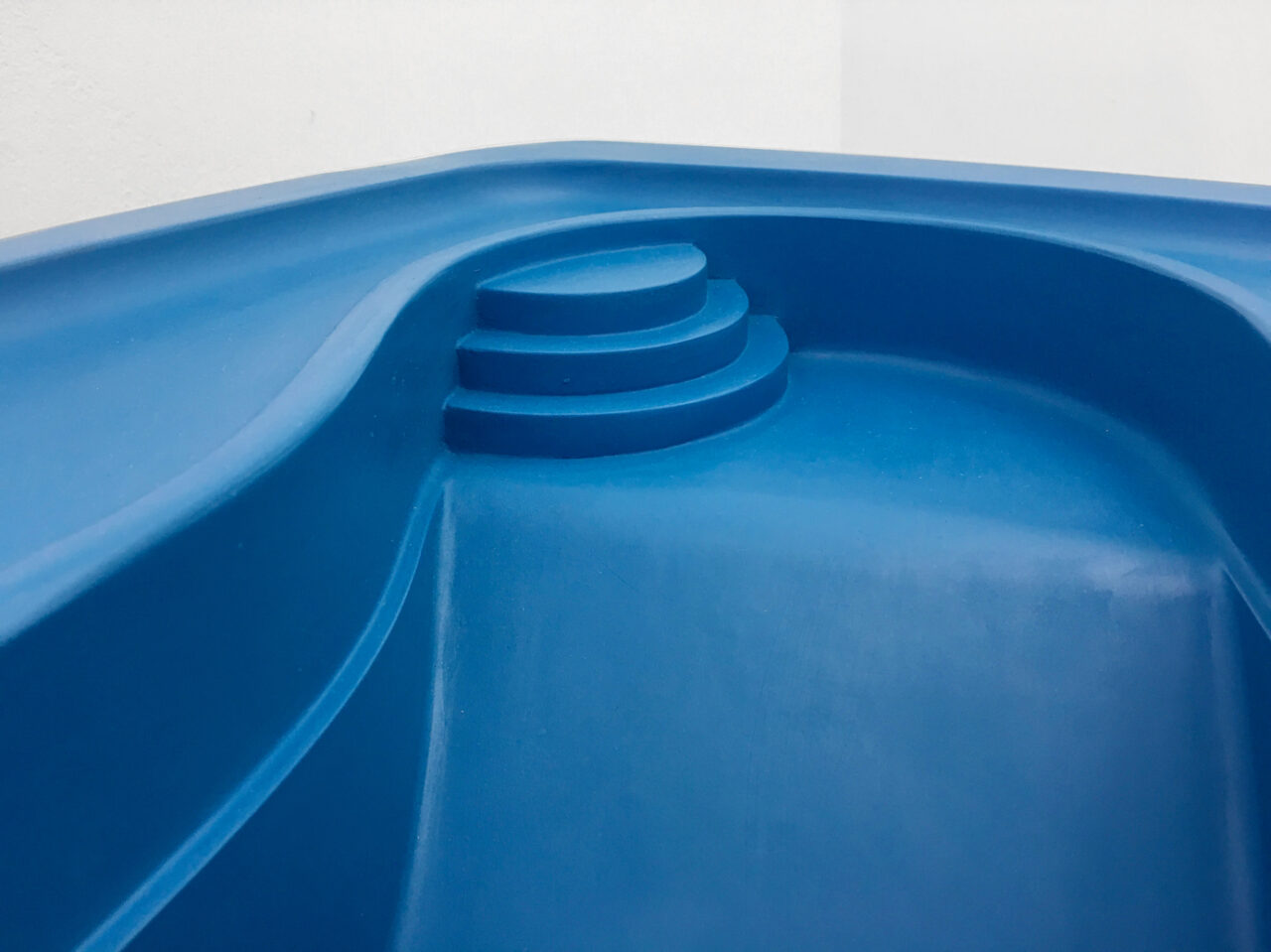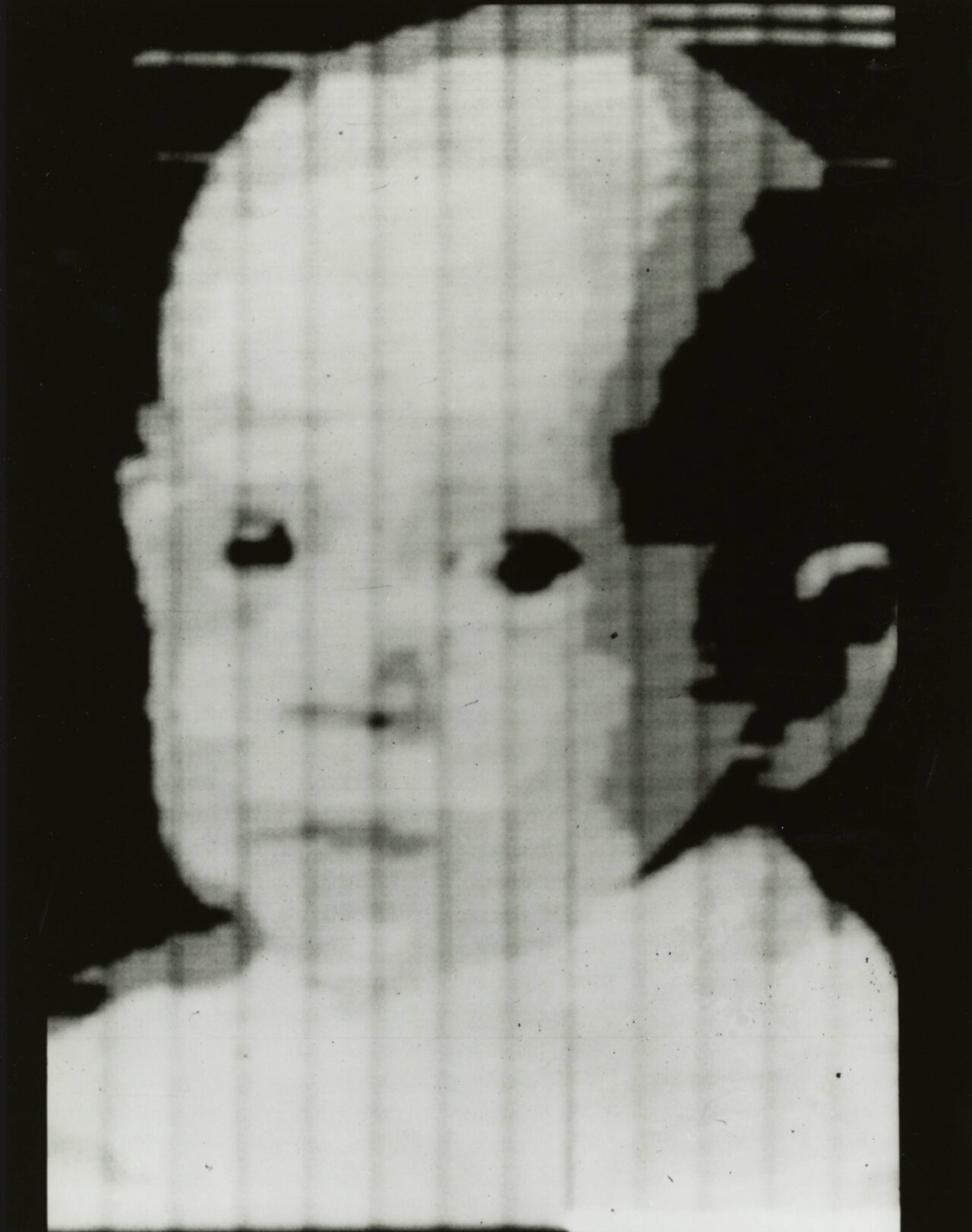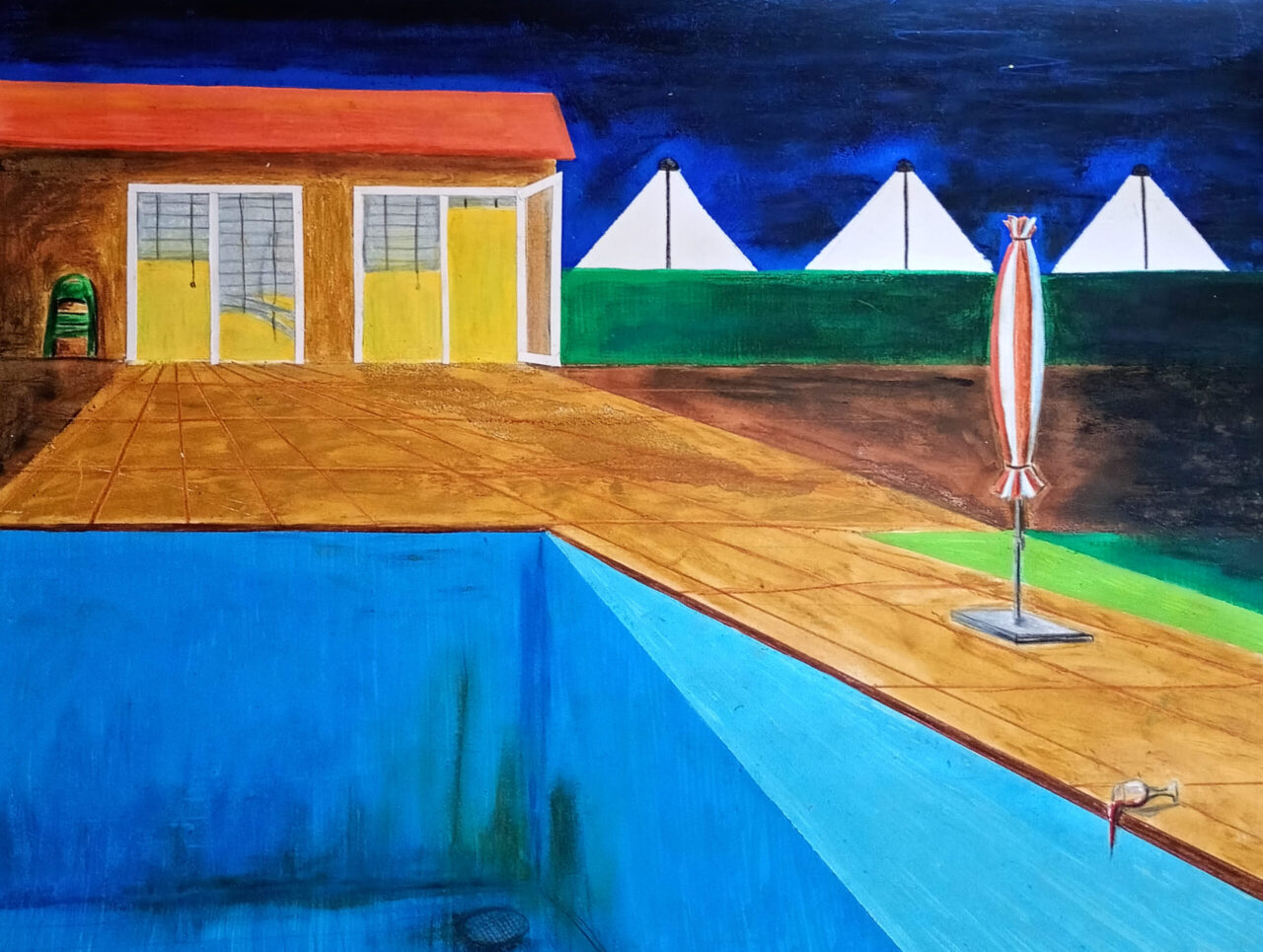
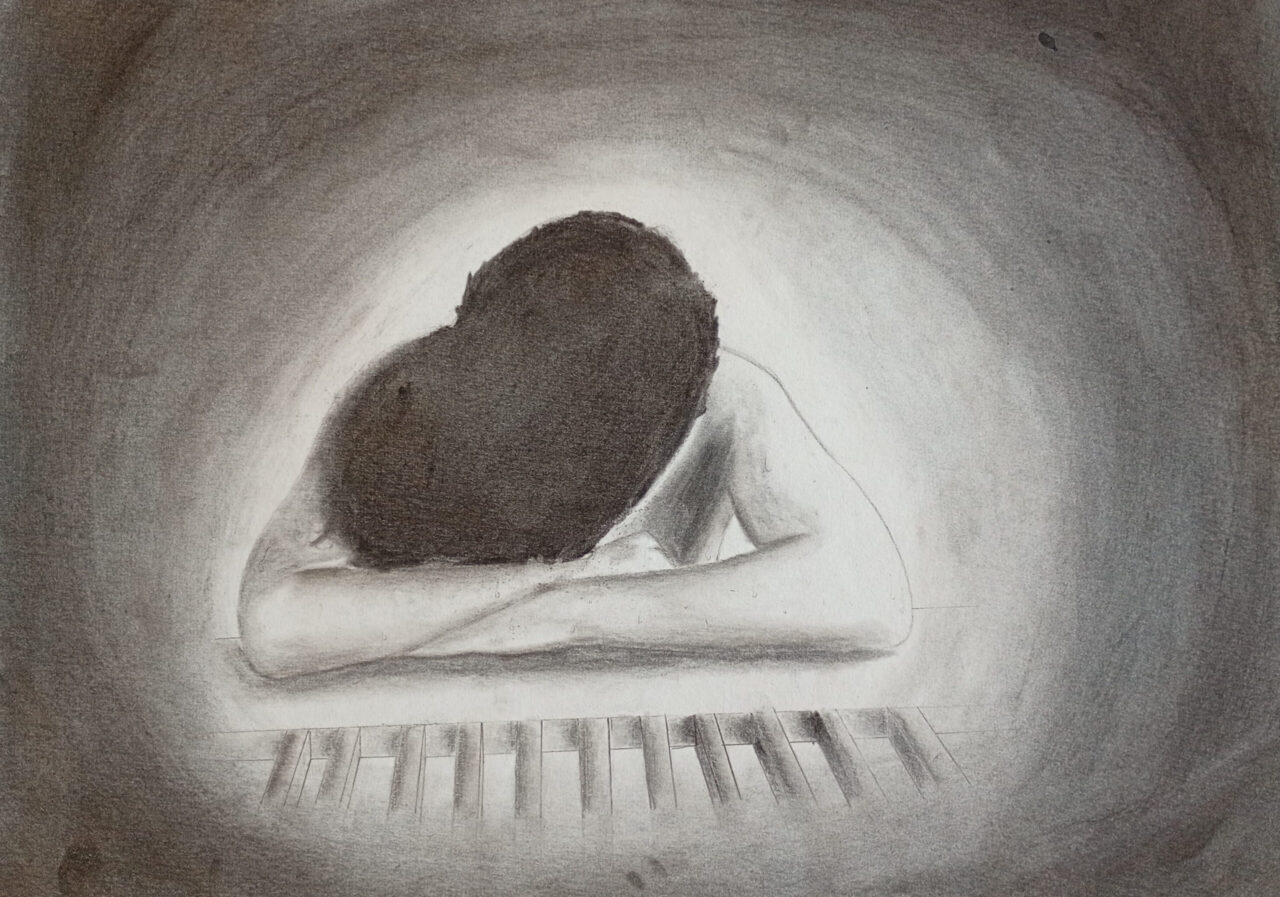
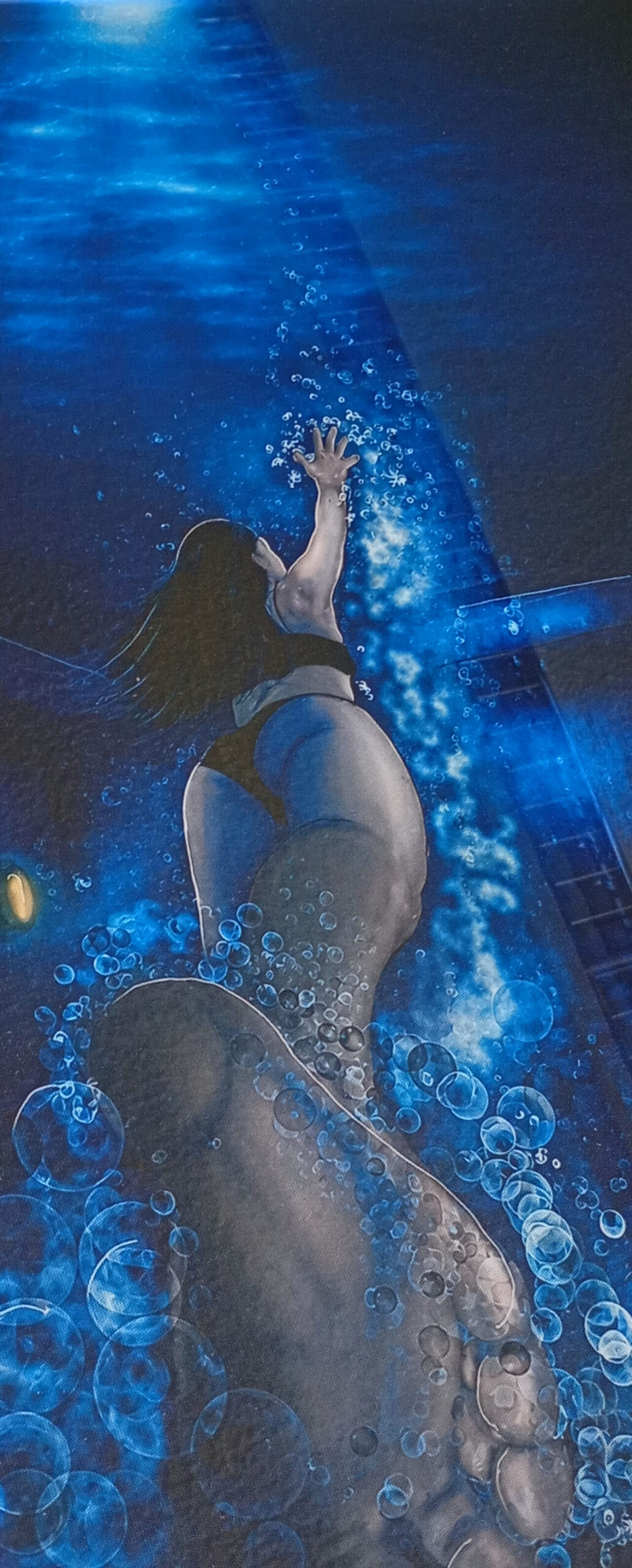
Consider the swimming pool, whether public or private, but more specifically, its darker side, be it environmental, ethical or social. This was the prompt given to the students on the visual arts course at the Lycée Blaise-Cendrars in La Chaux-de-Fonds as part of a project to be exhibited at the Musée des Beaux-Arts Le Locle alongside its exhibition For One Solid Time, Wet: The Swimming Pool in the Imagination.
The adolescent perception of the swimming pool within an artistic perspective is particularly relevant because it is a place that often leaves a lasting impression on our formative years. This idyll of childhood, a symbol of intense fun punctuated by brief moments of idleness, can sometimes lose some of that absolute joy once one reaches the age where the gaze of others and all the underlying issues suddenly take on disproportionate importance. At the swimming pool, we reveal ourselves; we compare ourselves to others. We put on a show, to a greater or lesser extent. We lay ourselves bare. The swimming pool is also dangerous. The pupils’ works thus convey intrusive stares from others, a feeling of suffocation and oppression that is often curiously akin to loneliness. Those weighty issues contrast with the carefree atmosphere culturally associated with swimming pools, yet there are put into perspective by the inner struggles and contradictions the students are navigating at this age. Nevertheless, some of the works adopt a lighter tone while still capturing, with a keen eye, the discomfort inherent in swimming pools or the mechanical reality that lies behind these facilities.
Whether working individually or collectively, the students are therefore delighted to present their own unique visions. But whilst the prestige of being exhibited at the Musée des Beaux-Arts Le Locle was a source of clearly perceptible intrinsic motivation for the students, it is the open-mindedness of the museum’s management and its technical team that I wish to highlight in conclusion. Indeed, it was not simply a matter of exhibiting the students’ works, as they were fully involved in the process: meetings and discussions with the museum management, collaboration with the technical team on the installation, and the public presentation of certain works included in the programme were moments of immense educational value.
-Dimitri Christofis, visual arts teacher.